Pico Prosta: Promova uma próstata saudável naturalmente – Diga adeus ao fluxo urinário fraco e ao desconforto!
This introduction explains how Pico Prosta fits into a natural approach to prostate health. It’s a prostate support supplement designed to work with a diet rich in organic foods. Foods like organic berries, green tea, turmeric, and selenium help reduce inflammation and support prostate comfort.
Instagram is full of wellness conversations. People share recipes, testimonials, and tips for a healthier lifestyle. These small changes, like using olive oil instead of canola oil, can help improve urinary flow over time.
Our method combines Pico Prosta with simple habits. Eating more leafy greens, drinking green tea, and practicing mindfulness are key. These habits, along with a prostate support supplement, aim to enhance urinary comfort and reduce prostate symptoms.
Key Takeaways
- Pico Prosta is positioned as a natural prostate health ally within a whole-foods, plant-forward plan.
- Social channels like Instagram help share recipes, testimonials, and lifestyle tips that reinforce change.
- Diet swaps—organic produce, less processed food, and healthy oils—can lower inflammation linked to prostate issues.
- Green tea, turmeric, selenium, and berries provide antioxidant and anti-inflammatory support for prostate comfort.
- Combining Pico Prosta with exercise, stress management, and reduced alcohol supports efforts to improve urinary flow.
Understanding Prostate Health: Basics, Symptoms, and Why It Matters
We explain the prostate in simple terms so you can spot changes early. It’s a gland below the bladder that surrounds the urethra. It plays a key role in semen production, affecting both prostate anatomy and urinary flow.
What the prostate is and how it affects urinary flow and comfort
The prostate is a small gland that helps make seminal fluid. It surrounds the urethra. Any growth or inflammation can press on the tube.
This pressure often causes a weak urine stream and a feeling of not fully emptying.
Common signs of prostate issues: weak stream, urgency, nocturia, discomfort
We look out for urinary symptoms like urgency and frequent nighttime trips to the bathroom. A weak urine stream is also a sign. Nocturia can make you tired the next day.
Some people feel prostate discomfort or pain during urination or sex.
How prostate health impacts overall wellness and quality of life
Urinary symptoms can make daily life uncomfortable. Frequent nighttime awakenings affect sleep and mood. They can also harm sexual function.
These changes can lower your quality of life and increase anxiety.
We suggest noticing symptoms early and making lifestyle changes. Diet, exercise, sleep, and supplements can help keep your prostate healthy and improve your overall well-being.
Pico Prosta: What It Is and How It Supports a Healthy Prostate
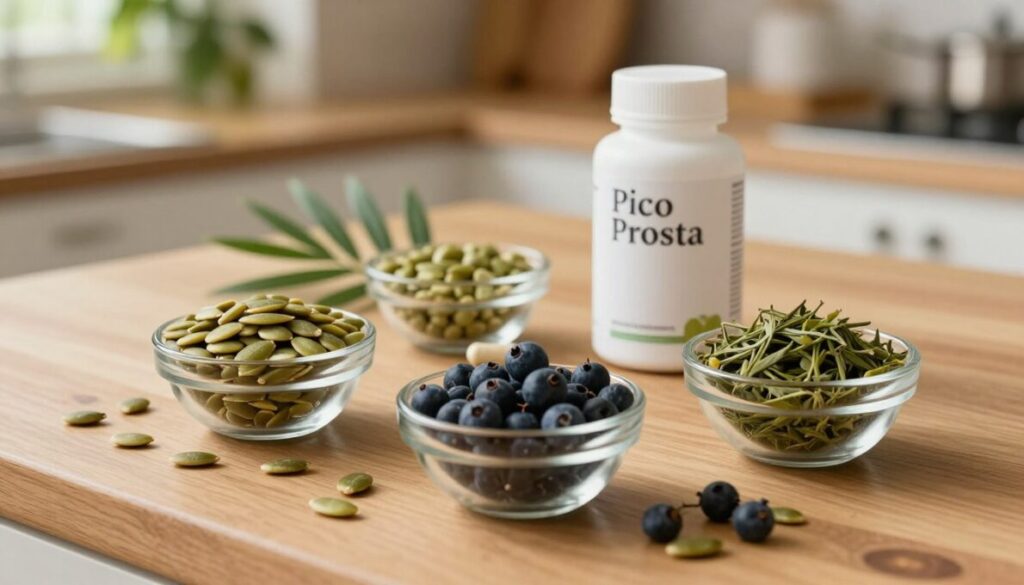
Pico Prosta is a supplement made to help with prostate health and better urine flow. It’s known for its clear ingredients and how it works well with a diet rich in plants. This combo supports your health for a long time.
Ingredients and natural components explained
Pico Prosta includes key ingredients found in many prostate health products. It has plant extracts like green tea and saw palmetto. It also has antioxidant-rich berry extracts and polyphenols.
Turmeric is in the mix for its curcumin, which fights inflammation. Selenium is added to help fight free radicals and support cells.
Proposed mechanisms: reducing inflammation and supporting urinary flow
The formula’s ingredients work together to fight inflammation and improve urine flow. Antioxidants in the formula help reduce oxidative stress and tissue irritation.
Curcumin from turmeric may lower inflammation and affect cell growth pathways. This can lead to a smoother urine flow and less urgency.
Selenium acts as a strong antioxidant, protecting DNA and supporting the immune system. Better blood flow in the pelvic area helps with urinary comfort.
How Pico Prosta fits into a whole-foods, plant-forward lifestyle
Using Pico Prosta with organic, whole foods is best. This boosts the absorption of nutrients like curcumin. It also increases antioxidant intake.
Eating organic berries, leafy greens, and matcha helps too. These foods complement the plant extracts in Pico Prosta. This approach avoids harmful chemicals that can disrupt hormones and inflammation.
We suggest using supplements as part of a bigger lifestyle plan. This includes eating whole foods, staying active, and seeing doctors regularly.
Dietary Strategies to Improve Prostate Function and Urinary Flow
We aim to give clear, usable food guidance that supports prostate comfort and better urinary flow. Small changes in what we eat can lower inflammation, balance hormones, and boost nutrient intake. A practical prostate-healthy diet focuses on whole, organic choices while we avoid processed foods that add hidden sugars and harmful fats.
Emphasize whole, plant-forward meals
We suggest building meals around vegetables, legumes, whole grains, nuts, and seeds. These foods form the backbone of anti-inflammatory foods and give fiber to support healthy weight and stable blood sugar.
Swap red and processed meats for lentil bowls, grilled salmon, or tempeh salads. Replace canola, corn, and soybean oils with olive oil, avocado oil, or small amounts of coconut oil for cooking.
Key foods and nutrients for prostate support
Green tea and matcha supply concentrated green tea catechins that may protect prostate cells. We include berries for ellagic acid and vitamin C, while cruciferous vegetables like broccoli add sulforaphane.
Selenium foods such as Brazil nuts and seafood deliver trace minerals tied to prostate health. We encourage safe sun exposure and D3 supplements when needed to achieve an adequate vitamin D diet.
Turmeric and extra-virgin olive oil add bioactive compounds that reduce oxidative stress. We recommend pairing these with black pepper and healthy fats to improve absorption.
What to limit or avoid
To reduce risk, we advise we avoid processed foods with preservatives, artificial sweeteners, and hydrogenated fats. That includes packaged snacks, many fast-food items, and ready-made sauces.
Cut added sugars and hidden syrups found in sodas, flavored yogurts, and boxed desserts. We also limit excess alcohol and choose whole-food snacks over refined options.
Practical swaps and meal ideas
Start the day with plain Greek yogurt or oatmeal topped with organic berries and a sprinkle of ground Brazil nuts. For lunch, choose a mixed greens bowl with chickpeas, avocado, and lemon-olive oil dressing.
We suggest an afternoon cup of green tea instead of coffee for a catechin boost. Dinner can be roasted salmon, steamed broccoli, and quinoa tossed with turmeric and olive oil.
| Goal | Foods to Emphasize | Foods to Avoid |
|---|---|---|
| Lower inflammation | Leafy greens, berries, turmeric, extra-virgin olive oil | Fried foods, hydrogenated oils, processed snacks |
| Boost protective compounds | Green tea (green tea catechins), matcha, cruciferous vegetables | Sweetened drinks, flavored powdered teas, sugary juices |
| Increase selenium & vitamin D | Brazil nuts, oysters, wild salmon, fortified D3 when needed | Highly processed seafood analogs, boxed meals with low nutrient density |
| Reduce carcinogenic load | Organic produce, whole grains, legumes | Processed meats, foods with nitrates, preserved deli items |
| Everyday habits | Drink green tea, eat berries, use olive or avocado oil | Overconsume alcohol, rely on packaged convenience foods |
Lifestyle Habits That Support Prostate Comfort and Reduce Risk
We focus on simple, daily habits to ease symptoms and lower risk. Small changes in movement, sleep, breathing, and substance use make a big difference. Instagram communities help by sharing quick routines and keeping us on track.
Regular movement boosts circulation and reduces pelvic congestion. Walking 30 minutes most days helps with weight control and lowers insulin and estrogen signaling that can worsen risk.
Exercícios pélvicos são simples e podem reduzir a urgência urinária e o fluxo fraco. Recomendamos exercícios pélvicos diários , como os exercícios de Kegel, realizados em séries de 10 repetições, com a contração mantida por cinco segundos e relaxamentos lentos entre elas. Adicione elevações pélvicas suaves e inclinações pélvicas para melhorar a força do assoalho pélvico.
Combine exercícios aeróbicos com treinamento de resistência duas a três vezes por semana. Sessões aeróbicas, como caminhada rápida ou ciclismo, auxiliam a circulação sanguínea. Sessões de força com o peso do corpo ou pesos livres preservam a massa muscular magra e a saúde metabólica.
Sleep and stress habits shape inflammation levels and recovery. Aim for consistent bedtimes and a dark, cool room. Short breathing practices reduce night-time awakenings and calm stress hormones linked to inflammation.
We use brief breathing drills and meditation as part of daily stress reduction prostate health routines. Try diaphragmatic breathing for five minutes after waking and before bed. Guided apps and Instagram clips can teach simple, repeatable sequences.
Alcohol and tobacco choices have clear impacts. Limiting drinks can lower inflammatory load and reduce cancer-related risks. Given data showing higher recurrence risks in other hormone-sensitive cancers, we advise staying mindful and choosing to stop alcohol prostate when possible to help overall risk reduction.
Quitting smoking brings wide benefits. Quit smoking benefits include improved circulation, lower cancer risk, and better prostate outcomes over time. We suggest setting a quit date, seeking nicotine-replacement support, and enlisting social accountability to increase success.
Below is a compact plan we can follow. It pairs movement, stress work, sleep hygiene, and substance changes for daily practice and measurable progress.
| Daily Habit | Action | How It Helps |
|---|---|---|
| Morning walk | 30 minutes brisk walking | Improves circulation; lowers insulin and estrogen signals |
| Pelvic routine | 3 sets of 10 Kegels; pelvic tilts; bridges | Strengthens pelvic floor; improves urinary flow |
| Strength work | 20–30 minutes resistance training, 2× weekly | Preserves muscle; supports metabolic health |
| Breathing/meditation | 5–10 minutes diaphragmatic breathing twice daily | Reduces stress hormones; aids stress reduction prostate health |
| Sleep hygiene | Consistent schedule; cool, dark room; limit screens | Improves recovery; lowers inflammation |
| Alcohol reduction | Limit or stop drinks weekly; choose alcohol-free days | Reduces calories and inflammation; supports decision to stop alcohol prostate |
| Stop smoking plan | Set quit date; use support groups or NRT | Lower cancer risk; long-term prostate health gains from quit smoking benefits |
Supplemental Support and Natural Compounds Backed by Research
We look at supplements and foods backed by research for prostate health. We aim to share what studies say, how these compounds work, and tips on dosage and safety. Always talk to a doctor before trying new supplements.
Turmeric and curcumin. Research shows curcumin can reduce inflammation and slow cell growth. It affects molecules linked to inflammation. Adults often take 500–2,000 mg of curcuminoids daily, with food or piperine to improve absorption.
Selenium and micronutrients. Selenium is an antioxidant good for prostate health. We look at selenium, zinc, and other trace elements. Take 50–200 mcg of selenium daily, but be careful not to take too much.
Vitamin D. Studies link vitamin D to lower prostate risk. It helps the immune system and reduces tissue growth. Get your vitamin D levels checked before taking supplements. Aim for 1,000–4,000 IU daily under doctor’s guidance.
Green tea and catechins. Green tea may help lower cancer markers and improve symptoms. Matcha and brewed tea have EGCG, which affects cell signaling. Studies show green tea can be beneficial.
Eating foods rich in these nutrients and taking supplements can help. Berries, veggies, and olive oil are good for prostate health.
Be careful with supplements. Curcumin can interact with blood thinners, vitamin D can affect calcium, and green tea can harm the liver. Always check with a doctor before starting.
Here’s a checklist for talking to your doctor: list your medications, supplements, and doses. Share recent blood tests and your health goals. This helps keep your discussion focused and informed.
Practical How-To: Integrating Pico Prosta into a Prostate-Healthy Routine
We aim for a simple plan to add Pico Prosta to our daily lives. Start with small, consistent steps that fit into meals, movement, and stress habits. This section offers easy timing, pairing tips, and a basic symptom log to track changes over weeks.
Daily use and timing
Start a steady schedule for Pico Prosta that matches your meal times. Take it with breakfast or lunch for consistency. Many find taking it in the morning before a meal natural and helps with sticking to it.
Check the product label for clear dosage tips. If it’s once a day, stick to the same time. If it’s split doses, take with meals to avoid stomach upset.
Pairing with foods for better absorption
Herbal blends absorb better with healthy fats. Try pairing with olive oil on toast, sliced avocado, or coconut-based smoothies.
Add a tablespoon of extra-virgin olive oil to salads or blend with avocado. These small changes help with better absorption of ingredients like curcumin.
Combine with diet, movement, and stress care
Layer Pico Prosta into a whole-foods routine for best results. Add organic berries, green tea, and vitamin D-rich foods to meals. These choices work well with the supplement.
Pair it with daily walks, pelvic floor exercises, and short breathing sessions. These strengthen results. Reducing stress lowers inflammation and supports steady urine flow.
Simple symptom tracking
Keep a log to track changes. Note urinary frequency, stream strength, nocturia episodes, urgency, pain, and comfort.
Record daily for the first month. This way, trends will be clear, and you can discuss progress with your clinician.
When to seek care
Some signs need immediate attention. Seek urgent care for sudden retention, severe pain, or blood in the urine. These are serious issues.
For gradual changes or questions, bring your symptom log and dosage tips to your healthcare visit. Get personalized advice.
Quick practical checklist
- Pick a daily time and follow how to use Pico Prosta consistently.
- Pair supplement with healthy fats at meals for better absorption.
- Combine with whole-food meals, exercise, and stress-reduction techniques.
- Track urinary symptoms in a short daily log for 4–8 weeks.
- Contact a clinician for sudden severe symptoms or if results stall.
| Action | Why it helps | Easy example |
|---|---|---|
| Consistent timing | Improves routine adherence and steady blood levels | Take with breakfast each morning |
| Pair with healthy fats | Boosts absorption of fat-soluble compounds | Blend with avocado or olive oil dressing |
| Combine with diet and exercise | Creates synergistic anti-inflammatory effects | Green tea, berries, daily 20-minute walk |
| Track urinary symptoms | Provides measurable outcomes to review | Daily log: frequency, stream, nocturia, urgency |
| Escalate care when needed | Ensures timely treatment for serious signs | Seek care for sudden retention or blood in urine |
Safety, Interactions, and When to Talk to a Healthcare Provider
When thinking about supplements for prostate health, safety is key. Always read labels and note the doses. Keep a daily log of what you take. This will help your doctor understand your supplements and health history.
Common precautions for herbal supplements
Herbal supplements can be strong. Turmeric or curcumin might affect blood thinners. Selenium is good for the prostate but can be harmful in large amounts.
Vitamin D is great for bones and immunity but too much can cause hypercalcemia. Always share your supplement labels with your doctor before starting any new supplements.
Possible interactions to watch for
If you’re on prescription meds, talk to your doctor about supplement interactions. Certain drugs, like blood thinners and diabetes medications, can interact with herbal extracts. This can also affect liver enzymes.
It’s best to have a doctor review your supplements to avoid risks. They can help with the right timing and dosage.
Warning signs that need medical attention
Some symptoms are urgent and need immediate attention. Blood in urine, severe pain in the pelvis or abdomen, and sudden trouble urinating are red flags. Know the signs of urinary retention and seek help right away if you see them.
When to see a doctor for prostate concerns
If your symptoms change, get worse, or affect your daily life, see a doctor. Tell your doctor if you have increased urgency, frequent nighttime bathroom trips, pain, or recurring infections. Early check-ups can help find problems like infections or stones.
How to prepare for a clinician visit
Bring your supplements, a symptom log, your prescriptions, and notes on diet or recent changes. Tell your doctor about any side effects you think you have. Having all this information helps your doctor understand your situation better.
Real-Life Tips from a Whole-Foods, Organic Approach to Prostate Wellness
We share simple ideas you can start today. Our focus is on easy meals, daily habits, and community support. These steps help us eat better, move more, and stay healthy.
Meal and snack ideas to try
We make snacks with organic berries, nuts, and seeds. A quick snack is a berry smoothie with spinach, kefir, and flax. It’s full of antioxidants and fiber without too much sugar.
Turmeric recipes are great as warm drinks or shots. A turmeric latte with coconut milk, black pepper, and honey adds healthy fats and fights inflammation.
For easy snacks, we choose organic options like avocado toast, olive-oil roasted chickpeas, or kale bites with sunflower seeds and lemon.
Daily habits from the juice-bar playbook
We choose organic produce and read labels to avoid bad stuff. Swapping vegetable oils for olive or avocado oil is a simple but effective change.
We take short breaks for movement each day. A ten-minute walk after meals boosts circulation and digestion. Small habits add up more than big pushes.
At the counter, we follow juice bar tips for portion and pairing. Try a green juice with cucumber, celery, apple, and lemon, then a snack with protein and healthy fat.
How to build accountability and community
We share healthy recipes and progress on social media. Posting daily smoothies or turmeric shots on Instagram keeps us motivated and inspired.
Local juice bars and wellness groups offer routines and recipes. We order organic juices through apps or join weekend classes to meet like-minded people. This accountability helps turn good intentions into habits.
| Action | Example | Why it helps |
|---|---|---|
| Morning boost | Berry-forward smoothie with spinach and flax | Antioxidants and fiber support urinary and metabolic health |
| Anti-inflammatory drink | Turmeric latte or turmeric shot with black pepper | Curcumin absorption improves when paired with healthy fats and pepper |
| Smart snack | Olive-oil roasted chickpeas or avocado on sprouted bread | Provides protein and healthy fats without processed ingredients |
| Daily mini-habit | 10-minute post-meal walk | Boosts circulation and aids digestion |
| Community step | Share recipes on Instagram or join local juice bar events | Creates accountability for lifestyle change and sustained motivation |
Conclusion
We’ve seen how small daily choices can lead to big improvements in prostate health. Eating more plants, taking supplements like turmeric and vitamin D, and staying active help a lot. These steps make it easier to go to the bathroom and feel good.
Remember, supplements are just a part of the solution. They shouldn’t be the only thing you rely on. This is the main point of our Pico Prosta conclusion.
Our natural prostate care summary suggests making lasting changes. Social media platforms like Instagram help us stay on track. They offer a space to share tips and keep the conversation going.
When we mix lifestyle changes with the right supplements, we see better results. This makes it easier to stick with our plans for the long haul.
We recommend a holistic approach to health. Use Pico Prosta as part of a bigger plan for your well-being. Always talk to your doctor if you have any concerns.
If you see blood in your urine, feel a lot of pain, or can’t pee at all, get help right away. These steps help us stay ahead of prostate health issues together.