
Bad Breath and Gum Issues? Discover How Prodentim Supports Oral Health Naturally
Many people in the U.S. are looking for a real solution to bad breath and sore gums. They want something that works well with their busy lives. Prodentim offers a natural way to care for your mouth by adding good bacteria instead of just killing the bad.
Em 2025, o ProDentim foi lançado como um suplemento alimentar em forma de goma de mascar . Ele contém Lactobacillus paracasei, Lactobacillus reuteri e Bifidobacterium lactis BL-04. Também inclui inulina, ácido málico, óleo de menta e fosfato dicálcico. Mostraremos como ele pode ajudar a combater a placa bacteriana, o tártaro, a inflamação gengival e o mau hálito. Ele promove um equilíbrio saudável na sua boca a longo prazo.
Key Takeaways
- Prodentim Supports a chewable probiotic formula with 3.5 billion CFU to rebalance the mouth.
- Oral probiotics offer a complementary route to traditional toothpaste and mouthwash.
- Key strains in ProDentim aim to reduce plaque, inflammation, and volatile sulfur compounds.
- Natural ingredients like inulin and peppermint oil support beneficial bacteria and fresh breath.
- We see this gum health supplement as a practical, daily step toward lasting natural oral care.
Why the Oral Microbiome Matters for Bad Breath and Gum Issues
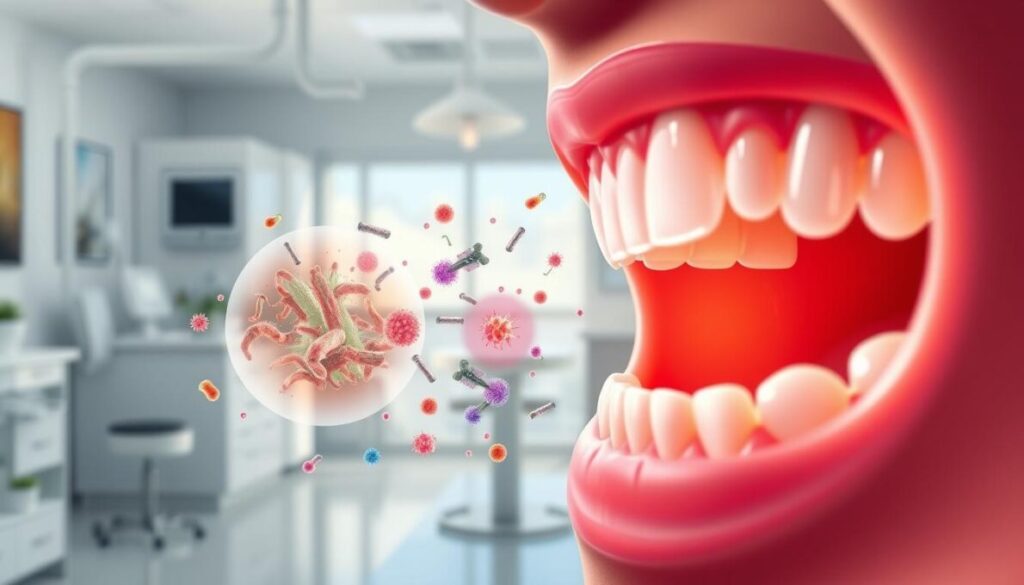
We have a community of microbes in our mouths. This includes bacteria, fungi, and viruses that help with digestion and train our immune system. When this balance changes, we face problems like bad breath and gum issues.
Overview of the oral microbiome and its role in mouth health
The mouth is home to billions of microorganisms. They live on the tongue, cheeks, gums, and teeth. These microbes protect us by keeping harmful species away and controlling acidity and plaque.
How imbalances lead to halitosis, gingivitis, and periodontitis
Changes in diet, antibiotics, or harsh antiseptics can upset this balance. This allows harmful bacteria to grow, causing bad breath. It also leads to plaque buildup and gum disease, including gingivitis and periodontitis.
Evidence linking oral microbiome imbalance to systemic health
Research shows that mouth infections can affect the body beyond the mouth. Oral bacteria can enter the bloodstream, causing inflammation elsewhere. This shows how important it is to keep the mouth balanced for overall health.
What Probiotics Do for Oral Health
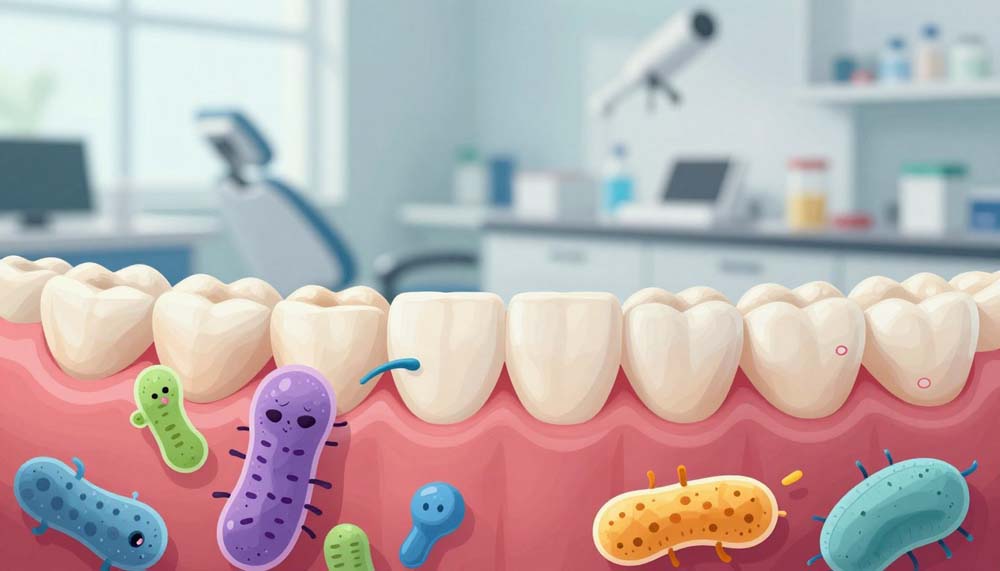
We explore how beneficial bacteria change the mouth’s balance. Small changes can affect breath, plaque, and gum health. Knowing how probiotics work helps us see why they’re effective.
Mechanisms: competition, antimicrobial production, and immune modulation
Probiotics compete with bad bacteria for space on teeth and tongue. They also take nutrients away from pathogens, stopping their growth. This is a key part of how probiotics work.
Good bacteria make substances that kill bad bacteria. These substances help prevent cavities and gum disease. They also help control the immune system, reducing inflammation and damage.
Clinical findings on probiotics reducing plaque, inflammation, and VSCs
Studies show probiotics can reduce gum redness and bleeding. They also lower signs of gum inflammation. This leads to less plaque and tartar.
Probiotics also lower bad breath-causing compounds. This improvement in breath is seen with better gum health and less plaque.
Why repopulating with beneficial strains can be more sustainable than indiscriminate antiseptics
We prefer to repopulate the mouth because broad antiseptics harm good bacteria too. Using harsh agents too much can let bad bacteria take over. Repopulation aims to balance the ecosystem and fight off harmful bacteria.
Targeted probiotics support long-term oral health by creating a stable community. When good bacteria stay, they keep the mouth healthy. This leads to better control over plaque and lasting benefits.
Prodentim Supports a Balanced Oral Ecosystem
We want to explain how a restorative probiotic approach can change daily oral care. Prodentim Supports oral ecosystem by delivering targeted strains in a chewable form. These strains dissolve across teeth, gums, and tongue. This method aims for lasting microbial balance, unlike one-time antiseptics.
How the probiotic approach differs from traditional options
When we compare probiotic vs mouthwash, we see a big difference. Antiseptic mouthwashes and many toothpastes kill a wide range of microbes. This reduces bacteria in the short term. ProDentim, on the other hand, supplies 3.5 billion CFU of beneficial strains to repopulate oral surfaces.
The chewable format lets those strains contact the mouth directly. This offers a repopulation strategy rather than constant microbial suppression.
The idea of restoring good bacteria
Our focus is to restore good bacteria instead of just killing microbes. By restoring beneficial strains, we create natural competition. This competition lowers harmful species tied to bad breath and gum problems.
Over time, this rebalanced ecology supports better breath and gingival resilience. It also reduces swings caused by harsh antiseptics.
Who benefits most from adding an oral probiotic
We recommend this option for people with frequent cavities, chronic bad breath, and recurring gingivitis or periodontitis. Those who rely on antibacterial mouthwashes and worry about microbiome disruption may find relief. Older adults at higher risk for gum disease and health-conscious consumers looking for gentle, long-term maintenance will likely appreciate this approach.
We find it useful for anyone frustrated by persistent issues despite regular brushing and dental care. In those cases, a complementary product that aims to restore the mouth’s microbial balance can support prevention and steady improvement.
Key Probiotic Strains in ProDentim and Their Benefits
We explore the main probiotic strains in ProDentim and their benefits for oral health. The formula uses specific bacteria to balance the mouth, prevent pathogen growth, and boost daily oral health.
Lactobacillus paracasei fights Streptococcus mutans and reduces plaque early on. This helps prevent cavities and lowers gum inflammation. Its ability to stop harmful bacteria is a big plus for daily oral care.
Lactobacillus reuteri helps with immune function and reduces mouth inflammation. Studies show it lowers gum inflammation and reduces periodontal disease risk. It’s known to fight periodontal inflammation and bad breath by controlling pathogens.
Bifidobacterium lactis BL-04 keeps the mouth’s bacteria in balance. It’s studied for its role in fighting chronic periodontitis. It stops harmful bacteria growth and supports mucosal and respiratory health. Its benefits extend to gum health and airway support.
ProDentim has 3.5 billion CFU per serving to support long-term health. We crafted the blend to tackle different oral threats. It aims for lasting ecosystem balance, not just symptom relief.
Here’s a quick look at each strain’s role:
| Strain | Main Oral Role | Practical Benefit |
|---|---|---|
| Lactobacillus paracasei | Inhibits Streptococcus mutans and limits plaque | Supports cavity prevention and healthier gum margins |
| Lactobacillus reuteri | Reduces inflammation; modulates immune response | Helps lower periodontal risk and improves breath quality |
| Bifidobacterium lactis BL-04 | Balances oral microbiota; supports mucosal defenses | Enhances oral microbial balance and respiratory support |
Natural Ingredients in ProDentim That Complement Probiotics
We explain how natural compounds in ProDentim work with probiotics for oral health. Each part has a special job: feeding good bacteria, protecting teeth, soothing gums, and freshening breath. Let’s look at the main ingredients and their roles in daily care.
Inulin as a prebiotic to nourish beneficial bacteria
Inulin, from chicory root, feeds probiotics. It helps them grow and stay on teeth and gums. Studies show it boosts probiotic growth and lowers acid spikes after eating sugar, protecting teeth.
Malic acid for tooth brightness and saliva-friendly pH support
Malic acid, found in fruits, keeps teeth bright without harsh abrasives. It helps maintain a healthy saliva pH and removes stains, improving tooth look and enamel strength.
Peppermint essential oil for antimicrobial, anti-inflammatory, and breath-freshening effects
Peppermint oil has many benefits beyond taste. It fights off harmful bacteria and reduces gum inflammation. It also freshens breath, helping probiotics control bad smells.
We mix these ingredients with dicalcium phosphate for calcium and phosphate. These minerals help strengthen teeth while probiotics and inulin balance microbes.
| Ingredient | Primary Function | How It Supports Probiotics |
|---|---|---|
| Inulin | Prebiotic fiber that feeds beneficial microbes | Enhances probiotic colonization and reduces harmful acid production |
| Malic acid | Surface brightness and pH moderation | Supports saliva balance and gentle stain removal without abrasion |
| Peppermint essential oil | Antimicrobial, anti-inflammatory, freshening | Helps control pathogenic species and soothes gums while freshening breath |
| Dicalcium phosphate | Remineralization and mineral supply | Provides calcium and phosphate for enamel repair alongside probiotic action |
How ProDentim Targets Plaque, Tartar, and Gum Inflammation
ProDentim uses a targeted probiotic approach to keep your mouth healthy. It fights harmful bacteria, soothes inflamed tissues, and helps prevent oral problems long-term with daily use.
Probiotic-driven reduction of plaque-forming pathogens
Probiotics compete with harmful bacteria for space and nutrients. They produce substances that kill bacteria and take their place. This helps lower plaque, which can lead to tartar buildup.
Anti-inflammatory effects that help reduce gingival bleeding and swelling
Lactobacillus reuteri and Bifidobacterium lactis BL-04 have anti-inflammatory properties. They help control inflammation in the mouth. Regular use can reduce gum bleeding and swelling.
Role in long-term prevention versus short-term symptom masking
ProDentim aims for long-term prevention, unlike quick fixes that can harm your mouth’s balance. It works to keep your mouth healthy over time, not just mask symptoms.
- Reduced pathogen load linked to less plaque and slower tartar formation.
- Lowered gingival inflammation and bleeding with consistent probiotic support.
- Sustained microbiome stability that complements daily brushing and flossing.
Scientific Evidence Behind Oral Probiotics and ProDentim’s Formulation
We look at studies that show how probiotics can improve oral health. Scientists have focused on certain strains and how they are delivered. This research links lab findings to real changes in gums and breath.
Summary of peer-reviewed findings supporting Lactobacillus and Bifidobacterium strains for oral health
Studies show Lactobacillus paracasei can stop Streptococcus mutans and lower plaque. Lactobacillus reuteri is linked to less oral inflammation and better immune control. Bifidobacterium lactis BL-04 has been shown to improve gum health in people with chronic periodontitis.
Clinical trial highlights showing improvements in gum metrics and breath
Clinical trials show probiotics can reduce bleeding gums, pocket depth, and bad breath. These changes are seen after a few weeks of daily use. Chewable or lozenge formats help probiotics stick to the mouth, leading to better results.
How ProDentim’s 3.5 billion CFU formulation aligns with research on effective dosing
Research suggests billions of CFU are needed for best results. ProDentim’s 3.5 billion CFU falls within this range. Its chewable form helps keep probiotics in the mouth, supporting research on oral health.
Other ingredients in ProDentim also help. Inulin aids in probiotic growth, while dicalcium phosphate supports tooth enamel. Peppermint oil has antibacterial properties against harmful bacteria in the mouth.
We connect the dots between research, trial results, and ProDentim’s formula. This shows how specific strains, ingredients, and dosage come together for a scientifically-backed oral probiotic solution.
Real-World Results: User Experiences and Reported Outcomes
We looked at many ProDentim reviews and user stories. People talk about fresher breath, less gum bleeding, and feeling more confident. They say it takes time to see these changes.
Common success stories
Users often mention better breath, calmer gums, and less tooth sensitivity. They like the natural ingredients and the easy-to-use chewable form. Many feel more at ease in social situations.
Typical timelines reported
People notice small improvements in a few weeks. Better gum health and plaque control take longer, often six to twelve weeks. Staying consistent leads to the best results.
Common limitations reported
Some users say oral probiotics don’t work for everyone. They point out that supplements are not a replacement for dental care. A few mention mild side effects that go away quickly.
We made a summary to show what users typically experience. It covers how long it takes, what benefits they see, and any limits they face.
| Outcome | Average Timeframe | Reported Frequency | Notes |
|---|---|---|---|
| Reduced bad breath | 2–4 weeks | Common | Often first noticeable change with daily use |
| Less gum bleeding | 4–8 weeks | Frequent | Improves with consistent oral hygiene plus probiotics |
| Reduced tooth sensitivity | 6–12 weeks | Occasional | May reflect reduced inflammation or enamel support |
| Variable individual response | Ongoing | Not uncommon | Genetics, diet, and baseline microbiome affect results |
| Need for professional care | Immediate to ongoing | Essential for many | Probiotics are supportive; not a substitute for treatment |
Safety, Side Effects, and Who Should Consult a Provider
We want you to feel confident when thinking about using oral probiotics. ProDentim is safe because it uses food-grade probiotics and natural ingredients like inulin and peppermint oil. Most people don’t have many problems. But, some might feel a bit of stomach upset or mouth sensitivity at first.
But, there are times when you should be careful. If you have a weak immune system, are getting chemotherapy, or have had an organ transplant, talk to your doctor first. Also, if you’re allergic to certain plants or have reactions to dental products, be cautious.
Watch out for any serious side effects. If you have mouth pain, swelling, fever, or signs of infection, see a doctor right away. Minor issues like gas or a slight taste change usually go away in a few days after stopping the supplement.
Talking to your dentist is also important. If you have gum disease, have had oral surgery, or are getting dental treatments, check with your dentist first. They can help make sure the probiotics won’t interfere with your dental care.
| Area of Concern | What to Watch For | Recommended Action |
|---|---|---|
| Immune compromise | Fever, persistent oral irritation, unusual infections | Stop supplement; contact physician to review probiotics contraindications |
| Allergies or sensitivities | Hives, oral swelling, throat tightness, persistent mouth soreness | Discontinue use; see allergist or dentist to identify trigger |
| Dental procedures in progress | Bleeding, implant or graft sites, active periodontal pockets | Discuss timing and product choice when you consult dentist probiotic guidance |
| Medication interactions | Unexpected symptoms after starting probiotics with other drugs | Review with prescribing clinician to confirm no contraindications |
| Common minor effects | Temporary gas, mild taste changes, brief oral sensitivity | Monitor for 1–2 weeks; stop if symptoms persist and consult provider |
Before starting any supplement, make a plan. Read the labels and look for allergens. Talk to your dentist and doctor to make sure ProDentim is safe for you.
How to Integrate ProDentim into Our Daily Oral Care Routine
We aim for a simple routine for morning and night. ProDentim is a chewable tablet that dissolves in the mouth. This maximizes contact with oral surfaces. Below, we outline steps for daily use, habits to protect the oral ecosystem, and signs to track progress.
Suggested use and timing
Follow the product directions for using ProDentim. Chew one tablet after meals or as directed. This allows probiotics to coat teeth, gums, and tongue. Avoid swallowing the tablet whole to ensure it reaches oral surfaces.
Plan to use the chewable probiotic after eating and brushing. This way, toothpaste residue doesn’t reduce probiotic contact. If taken after a meal, wait 10–15 minutes for saliva to disperse the probiotic strains.
Pairing with brushing and flossing
ProDentim complements, not replaces, mechanical hygiene. Continue brushing twice daily with fluoride toothpaste and flossing daily. This removes plaque and allows probiotics to colonize cleaned surfaces.
Complementary habits to support effectiveness
- Keep a balanced diet low in excess sugars to reduce fuel for harmful bacteria.
- Stay hydrated to support saliva flow and natural cleansing.
- Avoid frequent use of harsh antiseptic mouthwashes that can disrupt beneficial strains and reduce probiotic gains; we should avoid antiseptics oral microbiome when possible.
- Limit unnecessary antibiotic use and discuss alternatives with our physician when feasible.
How to track results
Track oral health with simple, observable markers. Note fresher breath, less gum bleeding after flossing, reduced sensitivity, and decreased visible plaque. These signs often appear over weeks to months with consistent use.
Keep a log or use photos to track oral changes weekly. For more formal tracking, record dates, symptoms, and oral care actions. This helps spot trends and informs discussions with our dentist.
| Action | Why it matters | When to expect change |
|---|---|---|
| Daily chew of ProDentim | Repopulates beneficial bacteria on oral surfaces | 2–8 weeks for noticeable breath and gum improvements |
| Brush twice daily and floss | Removes plaque and creates a clean surface for probiotics | Immediate hygiene benefit; supports probiotic colonization |
| Limit antiseptic mouthwash | Prevents killing beneficial strains; helps maintain balance | See probiotic effects sooner when antiseptics are reduced |
| Diet and hydration | Reduces sugar-driven dysbiosis and supports saliva | Weeks to months for lasting microbial shifts |
| Track and log symptoms | Provides measurable feedback for adjustments | Useful from week one; clearer patterns by month two |
Comparing ProDentim to Traditional Oral Care Products and Strategies
We compare probiotics to antiseptic routines to guide readers in choosing oral care steps. This overview contrasts quick fixes with long-term solutions. It also offers advice on when to see a dentist and how to create a comprehensive oral care plan.
Pros and cons of probiotics versus antiseptic mouthwashes
Probiotics like ProDentim aim to restore good bacteria and tackle bad breath and gum issues at their source. This method supports gum health and breath without killing all bacteria. The downside is it takes time; consistent daily use is needed for lasting results.
Antiseptic mouthwashes, on the other hand, quickly kill bacteria on the surface and give instant fresh breath. They’re great for quick relief before events or after dental work. But, using them too much can harm good bacteria, leading to more problems.
When to rely on professional dental care versus supplementation
We see supplements as additions, not replacements for dental care. Severe gum disease, infections, structural issues, or pain need a dentist’s attention right away.
Using a probiotic supplement daily can help between dental visits. If you notice bleeding, loose teeth, swelling, or severe pain, it’s time to see a dentist without delay.
How an integrated plan (brushing, flossing, probiotics) provides the best defense
An integrated oral care plan includes brushing, flossing, professional visits, and supplements. Brushing and flossing remove plaque and reduce mechanical stress. Regular dental visits allow for scaling, polishing, and checks.
Adding ProDentim to your routine helps replace good bacteria after cleaning, reducing the risk of problems coming back. We suggest combining daily probiotic use with regular brushing, flossing, and dental cleanings for lasting results.
| Strategy | Main Benefit | Primary Limitation | Best Use |
|---|---|---|---|
| Antiseptic mouthwash | Immediate reduction of surface bacteria and fresher breath | Can disrupt beneficial microbes; short-lived relief | Temporary control before events or for short-term rinsing |
| ProDentim (oral probiotic) | Restores beneficial bacteria and supports long-term balance | Requires daily use; effects build over weeks | Ongoing maintenance to reduce recurrence of halitosis and gingivitis |
| Mechanical care (brushing & flossing) | Removes plaque and debris; essential for oral health | Does not selectively rebuild microbial balance | Daily foundational care |
| Professional dental care | Diagnoses and treats disease; clinical cleaning | Requires appointments and can be costly | Treating progressive disease, infections, and structural issues |
Conclusion
We’ve looked into how Prodentim Supports changes oral care by mixing 3.5 billion CFU of special strains. These include Lactobacillus paracasei, Lactobacillus reuteri, and Bifidobacterium lactis BL-04. It also has inulin, malic acid, peppermint oil, and dicalcium phosphate.
This mix aims to balance microbes, reduce plaque and inflammation, and freshen breath. It also helps support enamel health as a natural oral care solution.
Our main point is clear: probiotic oral care focuses on growing good bacteria, not just killing all bacteria. Users report less bad breath, less gum bleeding, and less sensitivity. This happens when they use the supplement with regular brushing, flossing, and dental visits.
Results usually show up after weeks of consistent use. So, it’s important to have realistic expectations.
Safety seems good for healthy adults, but those with weakened immune systems or allergies should talk to their dentist or doctor first. In the end, Prodentim Supports shows that a mix of probiotics, daily care, and dental check-ups is key. It leads to better breath and healthier gums.