
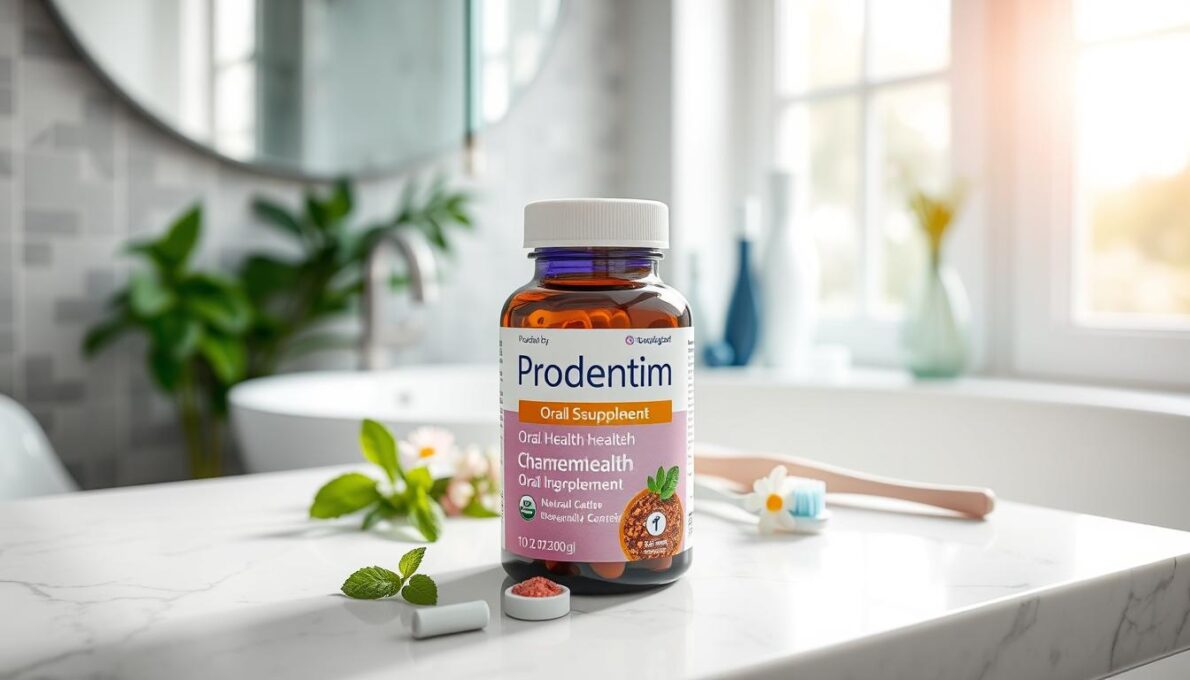
Prodentim: The Oral Health Supplement Everyone Is Talking About
Many of us think brushing and flossing are enough. But, we still face issues like bad breath, sensitive teeth, or bleeding gums. Prodentim is a supplement that goes beyond just cleaning the surface. It focuses on oral probiotics and balancing the microbiome to help with gum health, fresh breath, and tooth remineraliz
We will dive into Prodentim’s ingredients and the science behind them. We’ll also look at what users say on Instagram and other platforms. The chewable tablet format and natural ingredients like peppermint and inulin are also important. Plus, we’ll cover how to order from the official website and the 60-day money-back guarantee.
Our aim is to provide a detailed, evidence-based look at Prodentim. We want to help you decide if oral probiotics are right for you. We’ll explore how these supplements differ from antiseptic rinses, what studies say, and what users often report over time.
Key Takeaways
- Prodentim is marketed as an oral health supplement that targets the oral microbiome rather than only surface plaque.
- Oral probiotics in the formula aim to support fresh breath and gum health while aiding tooth remineralization.
- The chewable tablet format and natural ingredients like peppermint and inulin make it easy to integrate into daily routines.
- We will review scientific studies, ingredient roles, and verified user feedback from social channels.
- Ordering from the official site helps ensure authenticity and access to the 60-day money-back guarantee.
Why Oral Microbiome Balance Matters for Lasting Dental Health
We often focus on brushing and flossing while overlooking the microscopic community that lives in our mouths. A healthy oral microbiome balance keeps helpful bacteria in check, protects mucosal surfaces, and reduces the risk of chronic problems.
Root causes of oral health decline include diets high in sugar, chronic stress, smoking, environmental toxins, and frequent use of strong antibacterial products. These factors shift the mouth toward dysbiosis, where harmful species outnumber protective strains.
When dysbiosis takes hold, microbes form sticky biofilms that drive plaque formation. Those biofilms release acids and inflammatory signals that erode enamel and irritate gums. The result can be gingivitis, progressing to periodontitis and tooth decay if left unchecked.
We see common symptoms such as bleeding gums, persistent bad breath, tooth sensitivity, dry mouth, and rapid tartar buildup. These signs point to microbial imbalance rather than just surface debris.
There are limits of mouthwash as a long-term fix. Antiseptic rinses often act broadly, reducing both harmful and beneficial bacteria. Repeated use can deepen dysbiosis and leave gaps that opportunistic pathogens exploit.
Traditional dental care tackles surface problems. Brushing and professional cleanings remove deposits but do not always restore microbial diversity or address deeper gum disease causes. Few conventional products support the oral–gut axis or repopulate protective strains.
We believe targeting microbial balance offers a fuller approach. Restoring beneficial species helps reduce plaque formation, calm inflammation, and support lasting tissue health without relying only on harsh antiseptics.
| Problem | Primary Drivers | What Happens |
|---|---|---|
| Dysbiosis | High-sugar diet, smoking, stress, antibacterial overuse | Loss of beneficial strains, overgrowth of pathogens |
| Plaque formation | Biofilm development by harmful bacteria | Acid production, enamel erosion, tartar buildup |
| Gum inflammation | Microbial toxins and immune response | Bleeding, pocketing, risk of periodontitis |
| Overreliance on antiseptics | Frequent mouthwash and broad-spectrum agents | Temporary cleanliness, potential worsening of imbalance |
How Probiotics Work in the Mouth to Improve Oral Outcomes
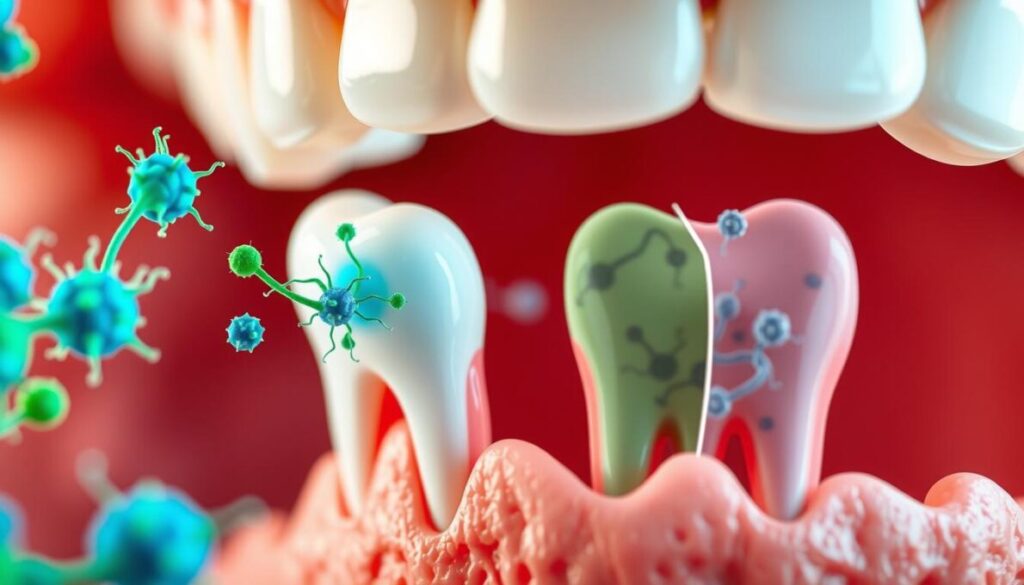
We often think of oral care as brushing and flossing. New science points to a broader approach that includes live beneficial microbes. Oral probiotics are strains taken to rebalance the mouth, not to wipe it clean. This shift changes how we think about daily prevention and long-term care.
Definition and mechanism
Oral probiotics are live microorganisms that help restore a healthy mouth. They work by introducing species that naturally occur in healthy mouths. These strains can occupy adhesion sites on teeth and mucosa, lower levels of harmful bacteria, and modulate local immune signals.
How they compete with pathogens
Probiotics reduce risk from pathogens in several ways. They compete for space and nutrients, limiting growth of harmful bacteria. They also produce antimicrobial peptides and acids that suppress harmful organisms. These actions help reduce plaque formation and lower inflammatory triggers.
Support for mucosal immunity
Probiotics interact with oral tissues to support mucosal immunity. They stimulate protective secretions and help regulate inflammatory responses in the gums and lining of the mouth. This immune support helps maintain a barrier that resists invasion by opportunistic microbes.
Probiotic oral health vs traditional products
We must compare probiotic oral health approaches with antiseptic products like mouthwash. Mouthwashes act quickly to reduce microbial load, yet their effect is short-lived and nonselective. Many rinse products kill both harmful and helpful species, which can allow imbalances to return.
Probiotics offer longer-term colonization when delivered by chewable tablets or lozenges. This ongoing presence helps sustain beneficial communities rather than repeatedly erasing the microbiome. The contrast is clear when considering probiotic vs mouthwash: one promotes microbial balance, the other provides immediate cleansing.
| Feature | Probiotic Approach | Mouthwash and Antiseptics |
|---|---|---|
| Primary action | Introduce beneficial strains to restore balance | Rapid reduction of overall microbial load |
| Duration of effect | Prolonged if strains colonize mucosa | Short-term; effect fades after rinsing |
| Impact on mucosal immunity | Supports and modulates local immune responses | Neutral or disruptive to immune signaling |
| Selectivity | Targets restoration of healthy microbes | Nonselective; may eliminate beneficial species |
| Best use | Ongoing preventive care and microbiome support | Short-term odor control and acute cleansing |
Detailed Breakdown of Prodentim Ingredients
We explore the main parts of the Prodentim formula. Each ingredient has a specific role in the mouth. This shows how the chewable tablet works to change the oral ecosystem, not just mask odors or kill bacteria.
Probiotic strains are at the heart of the formula. Lactobacillus paracasei helps good bacteria stick to the mouth. It also fights off harmful microbes, helping to control plaque and strengthen gums.
Lactobacillus reuteri makes a compound called reuterin. This fights Streptococcus mutans and reduces gum inflammation. Bifidobacterium lactis BL-04® boosts mucosal immunity and limits bacteria that cause cavities.
Two Streptococcus salivarius strains offer special benefits. BLIS K-12 colonizes the tongue and throat. It releases bacteriocins that stop bacteria that cause bad breath. BLIS M-18 makes enzymes that break down plaque and reduce acid.
Supporting ingredients help the probiotics work better and fix dental issues. Inulin from chicory root feeds good bacteria. It helps them survive and grow in the mouth.
Malic acid, found in strawberries, boosts saliva. It helps balance the mouth’s pH and gently whitens teeth. Peppermint and spearmint oils add flavor. They also fight bacteria and soothe gums.
Tricalcium phosphate adds calcium and phosphate. These minerals help strengthen tooth enamel. The chewable format puts these ingredients right where they’re needed.
The chewable format is key. It lets the ingredients work right away. They get in direct contact with teeth and gums, boosting health and support.
Here’s a quick look at what each ingredient does and how it helps the mouth.
| Ingredient | Main Action in Mouth | User Benefit |
|---|---|---|
| Lactobacillus paracasei | Adheres to surfaces; competes with pathogens | Reduced plaque and stronger gum resilience |
| Lactobacillus reuteri | Produces antimicrobial reuterin; modulates inflammation | Lower Streptococcus mutans levels; calmer gums |
| Bifidobacterium lactis BL-04® | Supports mucosal immunity; anti-inflammatory | Fewer cavity-prone microbes; gum support |
| BLIS K-12 | Produces bacteriocins against halitosis bacteria | Fresher breath and upper throat colonization |
| BLIS M-18 | Enzymes that reduce plaque matrix and acidity | Less plaque formation and acid stress |
| Inulin (chicory root) | Prebiotic fiber to feed good bacteria | Improved probiotic survival and colonization |
| Malic acid (strawberries) | Stimulates saliva and supports pH balance | Gentle whitening and enamel-friendly saliva boost |
| Peppermint & spearmint oils | Antimicrobial and anti-inflammatory menthols | Immediate freshening and gum soothing |
| Tricalcium phosphate | Delivers calcium and phosphate ions for enamel | Supports remineralization and reduces sensitivity |
We see these ingredients as part of a daily routine. Each one, from probiotics to inulin, malic acid, and tricalcium phosphate, helps with breath, gum health, and tooth strength.
Scientific Evidence Behind the Key Ingredients
We looked into recent studies on probiotics to understand Prodentim’s ingredients. These studies include randomized trials, lab work, and systematic reviews. Each ingredient has a role in improving breath, gum health, and enamel care.
Clinical findings on Lactobacillus paracasei and gum inflammation reduction
A 2020 study in Beneficial Microbes showed Lactobacillus paracasei can reduce gum inflammation and bleeding. It does this by modulating the immune system and fighting off harmful bacteria. This approach is gentler than using harsh chemicals.
Trials showing Lactobacillus reuteri’s impact on Streptococcus mutans and periodontal markers
Studies in the Journal of Clinical Periodontology found Lactobacillus reuteri lowers harmful bacteria and improves gum health. Other trials showed it reduces plaque and Streptococcus mutans. A 2023 study found it works even better when combined with B. lactis BL-04.
Research supporting BLIS K-12 and BLIS M-18 for halitosis and plaque control
Research in Applied and Environmental Microbiology shows BLIS K-12 fights bacteria that cause bad breath. Studies in the Journal of Oral Microbiology found BLIS M-18 reduces plaque and harmful bacteria. This leads to fresher breath and a healthier mouth.
Evidence for inulin as a prebiotic and studies on malic acid and salivary flow
Reviews in Nutrition Research Reviews highlight inulin’s benefits for probiotics. It helps good bacteria grow and keeps bad ones in check. A study in the Journal of Oral Rehabilitation found malic acid increases saliva, helping to clear the mouth.
Research on tricalcium (dicalcium) phosphate and enamel remineralization
Caries Research found tricalcium phosphate can repair tooth enamel by adding minerals. This helps fix early damage and reduces sensitivity. While more research is needed, the results are promising.
We used reliable sources and recent studies to explain how Prodentim works. The evidence shows a mix of ingredients can improve oral health.
Common Oral Health Concerns Prodentim Aims to Address
Many people struggle with oral health issues that brushing and flossing can’t solve. Prodentim aims to fix these problems by supporting a healthy balance of oral bacteria. It also includes ingredients that help restore normal oral function.
Bad breath can be hard to get rid of, even with good oral hygiene. This is because of bacteria that produce bad smells. Prodentim uses BLIS K-12 and BLIS M-18 to fight these bacteria. This helps keep your breath fresh.
Bleeding, inflamed, or receding gums are signs of an imbalance in your mouth. Studies show that certain probiotics can reduce bleeding and gum inflammation. This makes them a good noninvasive treatment for gum problems.
Tooth sensitivity and enamel erosion are often caused by acid attacks and mineral loss. Prodentim includes tricalcium phosphate to help rebuild enamel. Malic acid stimulates saliva, which helps neutralize acids and prevent cavities.
Dry mouth can lead to tooth decay and bad bacteria growth. Prodentim includes ingredients that help increase saliva flow. This helps maintain a healthy balance of bacteria and prevents dry mouth problems.
We’ve made a table to help you see how Prodentim addresses different oral health concerns. This way, you can decide what matters most to you and how the product can help.
| Concern | Main Drivers | Prodentim Targets | Expected Benefit |
|---|---|---|---|
| Persistent bad breath | Volatile sulfur compounds, tongue biofilm | BLIS K-12, BLIS M-18 | Reduced odor production and fresher breath |
| Bleeding or inflamed gums | Biofilm imbalance, inflammation | Lactobacillus paracasei, Lactobacillus reuteri | Lower bleeding, less inflammation, improved gum tone |
| Tooth sensitivity & enamel loss | Acidogenic bacteria, mineral depletion | Tricalcium phosphate, malic acid, probiotics | Remineralization and reduced sensitivity from enamel erosion |
| Dry mouth | Low saliva, poor pH buffering | Malic acid and targeted probiotic strains | Better salivary flow, improved microbial balance, less decay risk |
Benefits Users Report and Expected Timelines
We looked at clinical notes, user feedback, and how ingredients work to understand what people experience with Prodentim. The results depend on their oral health, how often they use it, and other habits like brushing and flossing.
Users often notice a change in their mouth’s balance first. As probiotics take hold, harmful bacteria decrease, and good ones increase. This can lead to less plaque. It usually takes weeks to months to see these changes, with many noticing a drop in plaque in 4–12 weeks.
Studies show that using Lactobacillus paracasei and Lactobacillus reuteri can reduce gum inflammation and bleeding. Users might see a slight decrease in gum bleeding in 3–8 weeks. For more noticeable improvements, it often takes 8–12 weeks.
Improvements in breath can happen faster than changes in the mouth. BLIS K-12 and BLIS M-18 help control bad breath and support the upper respiratory system. Many people notice fresher breath in about 10–14 days, and it stays that way with regular use.
Fixing enamel and reducing sensitivity takes longer. This is because rebuilding minerals is a slow process. Tricalcium phosphate and malic acid help strengthen enamel and increase saliva flow. The time it takes to see these improvements can vary from weeks to months, depending on the starting condition of the enamel.
We put together a summary to help set realistic goals. Using Prodentim daily for 30–90+ days is key to seeing the best results. Each stage brings incremental benefits.
- Early (10–14 days): fresher breath timeline, initial taste and odor shifts.
- Short term (3–8 weeks): reduced gum bleeding, softer plaque reduction.
- Medium term (8–12 weeks): clearer gum inflammation reduction timeline, improved pocket depth in some users.
- Longer term (2–3 months+): enamel remineralization timeframe shows up in checkups and sensitivity falls.
Safety, Manufacturing Standards, and Potential Side Effects
We look into safety and quality to help you choose oral supplements wisely. Prodentim safety seems good when products stick to clinical dosing and use known strains and ingredients. Research on Lactobacillus paracasei and others shows they are well-tolerated at the right doses.
Ingredients like inulin and peppermint oils have safe histories in food and dental products. This makes them reliable for use in oral supplements.
We share important safety tips on probiotic side effects. Most people don’t have serious reactions, just some mild issues like gas or taste changes. But, people with severe allergies or weak immune systems might face rare but serious issues.
We suggest talking to a healthcare provider before starting if you’re pregnant, nursing, or on complex meds. This is especially true for those with severe allergies or weakened immune systems.
We talk about what makes a product trustworthy. ProDentim is made in FDA-registered, GMP-certified facilities in the U.S. Good Manufacturing Practice ensures ingredients are verified, dosing is accurate, and products are tested for contamination.
This process helps ensure the product matches what’s on the label. It also reduces the chance of contamination or incorrect dosing.
We discuss the safety of using probiotics for a long time. Studies show using them for up to six months can improve oral health without major safety issues. Natural probiotics and organic acids are often better tolerated than harsh chemicals in some mouthwashes.
Still, it’s good to keep an eye on how your body reacts. This is especially true for long-term use.
We advise on how to avoid fake Prodentim and keep your purchases safe. Buy from the official website or authorized retailers to get the 60-day money-back guarantee. Be cautious of fake products on unauthorized sites with too-good-to-be-true prices or reviews.
Buying from official sources also helps check expiration dates and batch codes. This ensures you get the real product.
We offer a concise comparison to aid quick decisions.
| Topic | What to check | Why it matters |
|---|---|---|
| Prodentim safety | Clinical strains, recommended dosing, ingredient list | Confirms known safety profiles and reduces risk of unexpected reactions |
| probiotic side effects | Mild GI symptoms, rare allergic alerts, consult if immunocompromised | Sets realistic expectations and flags when medical advice is needed |
| GMP-certified supplement | FDA registration, third-party testing, clear lot records | Ensures product quality, potency and contamination control |
| avoid counterfeit Prodentim | Buy from official site, check seals, retain receipts | Protects refunds, guarantees authenticity, prevents exposure to fakes |
User Experience, Pricing, and Availability
Chewable probiotic tablets are easy to use in your daily routine. They dissolve in your mouth, so you don’t need water. This makes them perfect for people who are always on the go.
Reviews from U.S. customers show great results. They report fresher breath in about ten days and less gum bleeding in a few weeks. People in cities like Atlanta and Los Angeles have seen fewer cavities and less gum tenderness over time.
Dental hygienists also have positive feedback. They’ve noticed better plaque control and reduced pocketing. Social media platforms like Instagram share quick testimonials. But, it’s best to check verified comments for accurate information.
The price of Prodentim varies based on the package. A single bottle, which lasts a month, costs around $69.
Buying in bulk can save you money. A three-bottle pack costs about $59 per bottle, totaling $177. The best deal is the six-bottle package, priced at $49 per bottle, for $294. This package often comes with free shipping and eBooks.
Be cautious of promotional discounts and urgent messages. These can offer savings up to 75%. Always compare prices based on how long you’ll use the product.
For a safe purchase, buy Prodentim from the official website. The official store offers a 60-day money-back guarantee. It also helps avoid counterfeit products found on unauthorized sites.
When considering Prodentim, think about the price, package size, and return policy. Reading multiple reviews and confirming the seller ensures a safe and satisfying purchase.
Conclusion
As we conclude, the key points about Prodentim are clear. It targets the root of many oral problems. It uses probiotic strains and ingredients like inulin and malic acid. This mix aims to balance microbes, reduce inflammation, and support saliva and enamel.
Looking at oral probiotics, strains like Lactobacillus paracasei show promise. They help reduce gum inflammation and kill harmful bacteria. Users in the U.S. say it makes their breath fresher and gums less sensitive.
Choosing Prodentim is a smart move for daily care. It’s noninvasive and focuses on microbial balance. Buy it from the official site for real deals and guarantees. Regular use can lead to better comfort, breath, and gum health.