
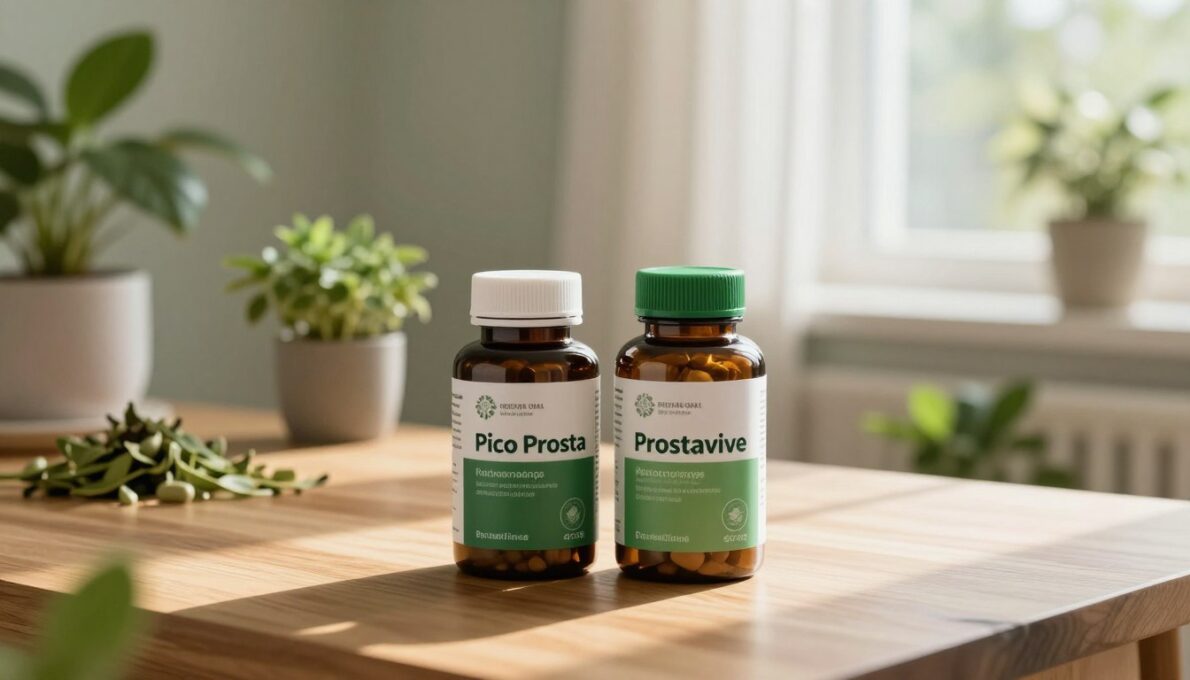
Struggling With Prostate Health? Discover Why Pico Prosta and Prostavive Are Gaining Attention
Urinary symptoms and prostate worries can be really tough. In this guide, we’ll explore why Pico Prosta and Prostavive are getting a lot of attention. We’ll also look at how to check them out against good health habits.
Remember how we take steps to protect ourselves from germs? Like wearing masks and washing hands? It’s the same with looking at prostate supplements and BPH support. We need to be careful and thorough.
Being open about what’s in a product is key. A review showed a 2.56 out of 5 rating from 515 people. This shows how important clear information and honest feedback are. We’ll apply this when we look at what’s in Pico Prosta and Prostavive.
In this guide, we’ll link safe habits with how to pick the right products. This way, we can find good ways to deal with urinary symptoms and BPH support.
Key Takeaways
- We’ll compare Pico Prosta and Prostavive, focusing on what’s in them, what they claim, and the evidence.
- Good hygiene and clear labels are good examples for checking supplements.
- Clear user ratings and specific details help us see if a product is trustworthy.
- Supplements can be part of a plan, but safety and scientific proof are most important.
- Our guide aims to help pick the best options for BPH support and urinary symptoms relief, with practical steps to check.
Understanding Prostate Health Basics and Common Issues

Let’s start with some basic facts about the prostate and its importance. The prostate is located below the bladder and surrounds the urethra. It plays a key role in reproductive health by producing seminal fluid. Changes in the prostate can impact urinary flow, sexual health, and overall comfort.
What the prostate does and why it matters for men’s health
The prostate is involved in making seminal fluid and helping it flow during ejaculation. It’s also close to the bladder and pelvic nerves. Even small changes in size or inflammation can affect how we urinate, leading to issues like frequent urination or a weak stream.
We monitor simple signs to see if there’s a change. Things like how often you urinate, the strength of your stream, and waking up to urinate at night are important. PSA tests are also used in prostate cancer screening, but symptoms and exams help decide when to test.
Common prostate conditions we see: BPH, prostatitis, and prostate cancer
Benign prostatic hyperplasia, or BPH, is common in older men. It causes the gland to grow, leading to symptoms like a slow stream, trouble starting to urinate, and needing to urinate more often.
Prostatitis refers to several inflammatory conditions. Acute bacterial prostatitis is serious, with fever and severe pain. Chronic forms are milder but still cause ongoing discomfort and urinary issues.
Prostate cancer can grow slowly or quickly. We use exams, imaging, and screening tools to find it early.
Symptoms that should prompt us to consult a provider
Some symptoms need immediate attention. Blood in urine, severe pelvic or back pain, sudden trouble urinating, and acute urinary retention are urgent signs.
We suggest keeping a diary of symptoms over time. Note how often you urinate, the strength of your stream, any pain, and fever. Sharing this information with your doctor helps them decide on tests and when to consider PSA checks or further evaluation.
- Measure daytime and nighttime urinary frequency.
- Note changes in stream force and hesitancy.
- Record pain, fever, or visible blood in urine.
Risk Factors, Lifestyle Influences, and Preventive Strategies for Prostate Wellness

First, we look at who’s at higher risk. Age, family history, and being African American increase risk. These factors help decide how often we should get checked.
But, we can change some risks. Being overweight and not moving enough can make symptoms worse. Setting goals for activity, strength training, and weight can help.
Age, family history, and other non-modifiable risks
Risk goes up after 50. Having a family history of prostate cancer doubles our risk. Men of African descent face higher rates and earlier onset. It’s important to share family history with doctors for timely screening.
How diet, exercise, and weight influence prostate symptoms
What we eat affects our health. Eating like a Mediterranean diet helps prostate health. It includes veggies, tomatoes, legumes, and healthy fats.
Regular exercise and pelvic-floor exercises help urinary symptoms. Walking, cycling, and strength training are key. Pelvic-floor exercises help with urgency and emptying.
Daily habits we can adopt to support long-term prostate health
Small changes can make a big difference. Stay at a healthy weight and exercise regularly. Include pelvic-floor exercises a few times a week.
Drink less alcohol, quit smoking, and eat more green tea and fiber. Regular check-ups and tracking diet and activity are key. Talking to a doctor about screening timing is also important.
How Supplements Fit Into a Prostate Health Plan
We see supplements as one part of a bigger plan for prostate health. Some men find relief from symptoms with certain products. But, others don’t see any change. Supplements can help with urinary issues or mild inflammation, but they can’t replace a doctor’s check-up for serious problems.
When supplements can help and when they can’t
Supplements can support prostate health in various ways. They might help with urinary flow or reduce nighttime trips to the bathroom. But, the evidence for ingredients like saw palmetto and zinc is mixed. Always check with a doctor first, especially if you have new or worsening symptoms.
We don’t count on supplements to treat prostate cancer or replace medical treatments for enlarged prostate. If you notice blood in your urine or symptoms get worse, see a doctor right away.
Safety, interactions, and speaking with our healthcare team
Before trying a new supplement, we check its safety. Talking to a doctor helps avoid bad interactions with other medicines. They can adjust your treatment plan if needed.
We keep a list of all our medicines and supplements to share with our doctors. Pharmacists are great for checking for interactions and making sure we’re taking things safely.
Red flags in supplement marketing and how to evaluate ingredients
We’re wary of big claims and hidden ingredients. Products without clear labels or third-party testing don’t get our trust. We prefer products with clear labels and scientific backing.
We check the ingredients and the evidence behind them. Seals from organizations like USP and clear information about the maker are important to us.
Here’s a quick guide to help us choose supplements wisely.
| Evaluation Point | What to Look For | Why It Matters |
|---|---|---|
| Ingredient transparency | Full label with mg per ingredient, no hidden proprietary blends | Allows assessment of efficacy and safety based on known doses |
| Third-party testing | Seals from USP, NSF, or ConsumerLab | Confirms purity, potency, and absence of contaminants |
| Clinical evidence | References to trials or systematic reviews for active ingredients | Helps gauge realistic benefit for symptoms versus marketing claims |
| Interaction risk | Warnings about blood thinners, alpha-blockers, or prescription meds | Prevents harmful drug interactions and guides clinician review |
| Manufacturer transparency | Clear contact info, manufacturing location, batch numbers | Enables accountability and reporting of adverse events |
| Price vs. dose | Cost per effective dose, not per capsule | Ensures value and helps avoid under-dosed products |
Pico Prosta and Prostavive: What They Are and How They Differ
We examine two well-known prostate support options with great care. Our goal is to provide a detailed look at what products offer. We focus on what men might find useful when picking between these supplements.
Ingredient profiles commonly marketed
Labels often list familiar ingredients like saw palmetto and zinc. Brands like Pico Prosta and Prostavive group these items differently. Pico Prosta usually has a mix of extracts, while Prostavive might highlight specific ones or add vitamins.
We check the exact amounts in each capsule and if any are in a secret blend.
Formulation differences, dosage forms, and claimed benefits
The number of capsules, whether they’re single or multi-ingredient, and their form matter. Some like single-ingredient products for fewer side effects. Others prefer blends for more benefits. Claims include better urine flow and less nighttime bathroom trips.
We see these claims as starting points and check the evidence behind them.
Who might consider each product and why
Men with mild symptoms and no complex meds might try a multi-ingredient product. Those with many drugs or sensitivities might prefer simpler formulas. For a fair comparison, we suggest checking for drug interactions and clear labeling.
Talking to a doctor is wise. They can help match a product to your needs and health.
Evidence Summary: Research, User Reviews, and Real-World Reporting
We look at trials, ratings, and everyday reports to give a clear view. Both scientific studies and consumer feedback are important. We aim to show how to balance clinical findings with what people say in reviews and forums.
Overview of available clinical studies and limitations
Research on prostate supplements varies in size and quality. Some studies support saw palmetto for symptom relief in men. But, trials on pygeum and beta-sitosterol show mixed results.
Many studies are small, short, or lack clear goals. This limits what we can conclude. Short follow-up, variable dosing, and funding from companies can also skew results. We need more long-term, high-quality trials.
What user ratings and testimonials tell us—interpreting mixed feedback
User reviews add color to the picture. An average rating can show patterns, but it’s not the whole story. For example, a 2.56/5 average from many reviewers suggests mixed experiences.
We suggest looking for common themes in reviews of Prostavive. Watch for mentions of side effects, symptom changes, and delivery issues. Be wary of fake reviews and biased comments.
How we reconcile anecdotal reports with scientific evidence
We combine clinical evidence with user reports for a balanced view. Trials show average effects and safety in controlled settings. Testimonials reveal what happens in real life.
When looking at testimonials, focus on consistent messages. Check if reported improvements match trial timelines. Be cautious when reviews don’t match established research.
| Evidence Source | What to Look For | Typical Strengths | Common Limitations |
|---|---|---|---|
| Randomized trials (saw palmetto, pygeum) | Blinding, sample size, outcome measures | Controlled comparisons, less bias | Small samples, short follow-up |
| Product-specific studies (clinical evidence Pico Prosta) | Study sponsorship, comparator, endpoints | Direct relevance to formulation | Industry funding, limited replication |
| Consumer ratings | Average score, review count, date spread | Large samples reflect diverse users | Fake reviews, selection bias |
| Individual testimonials | Symptom timelines, side effects, context | Detailed personal experience | Anecdotal, not generalizable |
| Real-world safety reports | Adverse events, interactions with meds | Signals of rare harms | Underreporting, variable confirmation |
We suggest using research as a guide, not a promise. Compare clinical evidence with user reviews while carefully reading testimonials. This balanced approach helps with personal choices.
Safety, Side Effects, and Quality Control Considerations
We take safety seriously when looking at prostate supplements. Before picking a product, we check known risks, claims, and independent tests. This helps us weigh benefits against possible harms.
Potential side effects to watch for and interactions with medications
Some people might feel stomach upset, headaches, dizziness, or allergies after starting supplements. We look out for these side effects and tell you to stop if they’re bad or last long.
Herbal ingredients like saw palmetto and fish oil can raise bleeding risks. They might not mix well with blood thinners. Always check with your doctor about possible drug interactions.
Manufacturing standards, third-party testing, and labeling transparency
Quality starts in the factory. We check for Good Manufacturing Practice (GMP) and Certificates of Analysis (CoA) to ensure purity and potency.
Products with USP, NSF, or other seals are third-party tested. These seals mean less chance of contamination and accurate labeling.
Being open about ingredients is key. We avoid products with secret blends. Clear labels and details help us trust a supplement’s safety.
Questions to ask your provider before starting a new prostate supplement
Take a checklist to your doctor’s visit. Ask about possible interactions with your current meds or health issues. Find out about monitoring, like PSA tests or tracking symptoms.
Ask how long to try a supplement before seeing results and when to stop. If you’re on blood thinners or have surgery coming up, tell your doctor. This is crucial for safety.
If unsure, always talk to your doctor about prostate supplement safety. This approach keeps your health in mind and avoids unnecessary risks.
Practical How-To: Choosing, Using, and Monitoring Pico Prosta and Prostavive
Choosing a prostate supplement like Pico Prosta or Prostavive should be straightforward. Start by checking the seller’s reputation, return policy, and contact info. Also, look at their shipping and handling practices.
Before buying, compare supplement labels. Look at serving size, milligrams of active ingredients, and if they use standardized extracts. Check the form, like capsules or tablets, and the recommended dosage.
It’s important to check for third-party testing and read recent user reviews. Look for Certificates of Analysis and lab results from places like Eurofins. Customer feedback can also help spot common side effects.
When starting a new product, follow a monitoring plan:
- Start with the recommended dose unless your doctor advises otherwise.
- Keep a simple diary to track urination frequency and strength.
- Record any side effects and when they started.
- Set a follow-up with your doctor in 6–12 weeks to review progress.
We created a table to compare supplements easily. It highlights key features to look at quickly.
| Feature | Pico Prosta (example) | Prostavive (example) |
|---|---|---|
| Serving size | 2 capsules | 1 capsule |
| Standardized extract | Saw palmetto 85–95% fatty acids, 320 mg | Saw palmetto 100 mg, beta-sitosterol 60 mg |
| Other active ingredients | Pygeum 50 mg, zinc 15 mg | Pygeum 25 mg, pumpkin seed 100 mg |
| Form | Capsule | Softgel |
| Third-party testing | Certificate of Analysis listed | No third-party link on label |
| Customer feedback | Mixed: improved flow, some GI upset | Mostly positive: night-time frequency reduced |
| Return policy | 60-day money-back | 30-day satisfaction guarantee |
Watch for signs that mean you should stop the supplement and see a doctor. Look out for severe side effects, blood in the urine, or trouble urinating. These are reasons to see a urologist right away.
Keep track of how the supplement affects you by comparing your diary notes weekly. If you don’t see improvement in 6–12 weeks or if symptoms get worse, get lab tests and imaging as your doctor suggests. This helps decide if you should keep using the product or try something else.
When choosing sellers, go for established pharmacies and major retailers. They usually have clear contact channels and good return policies. Independent makers like Nature’s Bounty or Thorne Research often share testing details. This transparency helps us trust our purchase.
We should talk regularly with our healthcare team. If you’re unsure about monitoring supplement effects or interpreting labels, ask your doctor or pharmacist. They can guide you on when to see a urologist and if your symptoms need further investigation.
Real-World Context and Relevant Public Health Practices
Prostate wellness is closely linked to everyday health practices. Simple steps at work and in the community help men with chronic conditions. Making small changes can make care easier and keep appointments on schedule.
Incorporating lessons from organizational safety and hygiene practices
Institutions like the Secretaria Executiva de Articulação Nacional do Estado de Santa Catarina in Brasília have shown the way. They increased sanitization, required masks, and enforced distancing after COVID-19 cases. This reduced risks for staff and visitors.
Such procedures highlight the importance of clear protocols and regular cleaning. They support the continuity of services and protect those who need regular check-ups.
Why workplace and community health measures still matter for vulnerable groups
Workplace hygiene is crucial for men with prostate issues. Clean spaces, hand sanitizer, and masks during outbreaks help. They ensure vulnerable populations don’t miss appointments or face complications.
Employers who focus on infection control help caregivers and patients. They keep preventive care prostate routines consistent.
Connecting prostate wellness to broader preventive care in our lives
We suggest combining prostate checks and supplements with standard prevention steps. Staying up-to-date on immunizations like flu and COVID-19 is key. It reduces illnesses that can interrupt treatment.
Open talks between employees and health services can tailor measures. This protects high-risk staff without disrupting work.
We urge healthcare teams, employers, and leaders to align policies. The goal is to reduce exposure, preserve access, and support men’s health. Simple, ongoing public health practices make safer environments for all.
Conclusion
Looking at the Pico Prosta and Prostavive conclusion, we see they offer support for urinary comfort. Yet, they should not replace a doctor’s check-up. Always check the ingredients, how much to take, and look for third-party testing before trying a supplement.
Our key takeaways on prostate supplements stress safety and solid evidence. The mixed reviews and different details highlight the importance of being open. Just as we adapt to new risks, we must act fast if symptoms get worse. Always follow the advice of our healthcare team.
For better prostate health, we suggest three steps: talk to a doctor, keep track of symptoms, and focus on healthy living. This includes a good diet, regular exercise, and screenings. When picking a supplement, look for clear labels and quality checks. If new issues pop up, stop the supplement and see a doctor.